ISO 14644

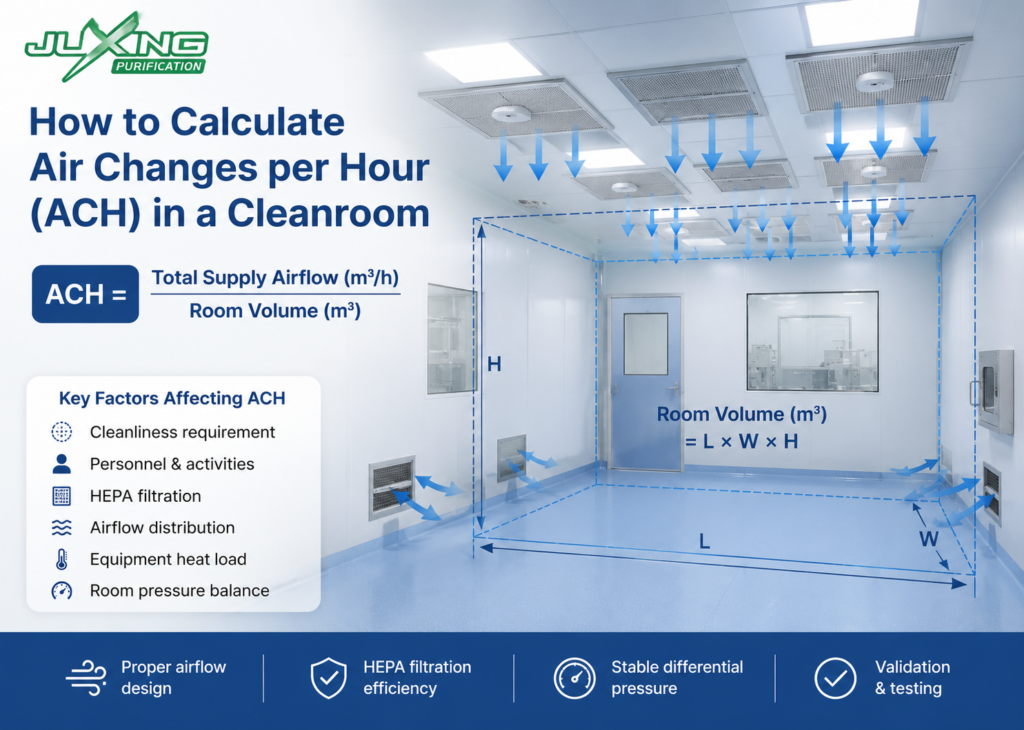
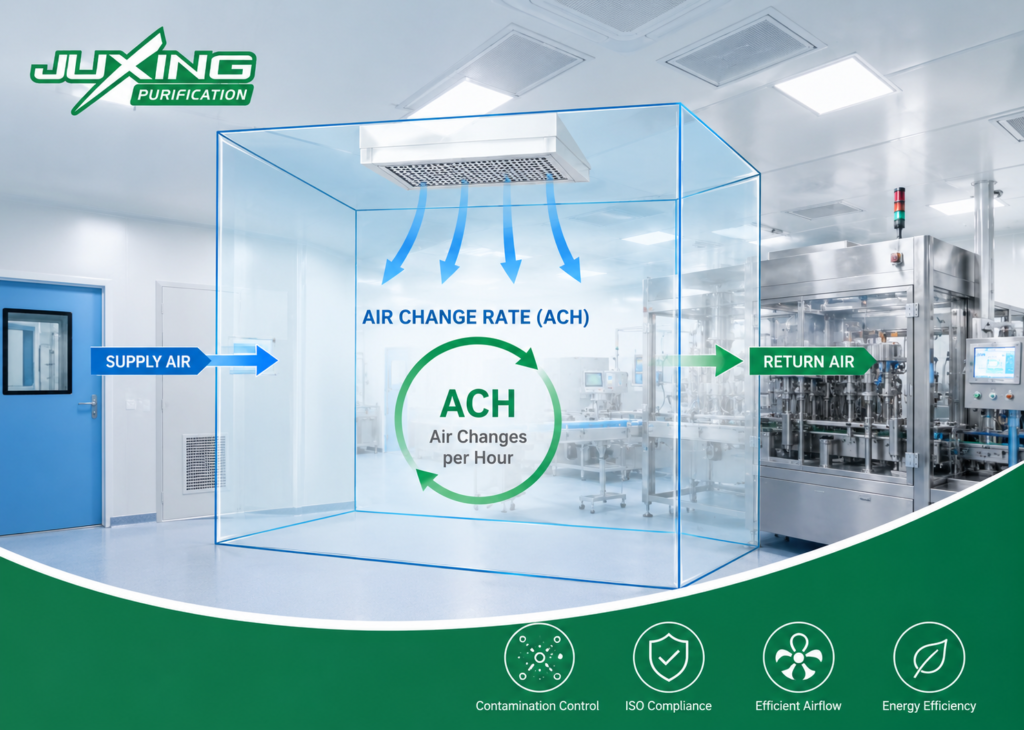
Cleanroom air changes per hour calculation showing supply airflow, room volume and HEPA filtrationcalculation

How to Calculate Air Changes per Hour (ACH) in a Cleanroom

Introduction Air Changes per Hour, commonly abbreviated as ACH, is widely used in cleanroom and controlled-environment design. It expresses the total supply airflow delivered to a room in one hour as a multiple of the room’s internal volume. ACH can help engineers estimate the airflow required for contaminant dilution, particle removal, temperature control, humidity control

How to Calculate Air Changes per Hour (ACH) in a Cleanroom Read More »

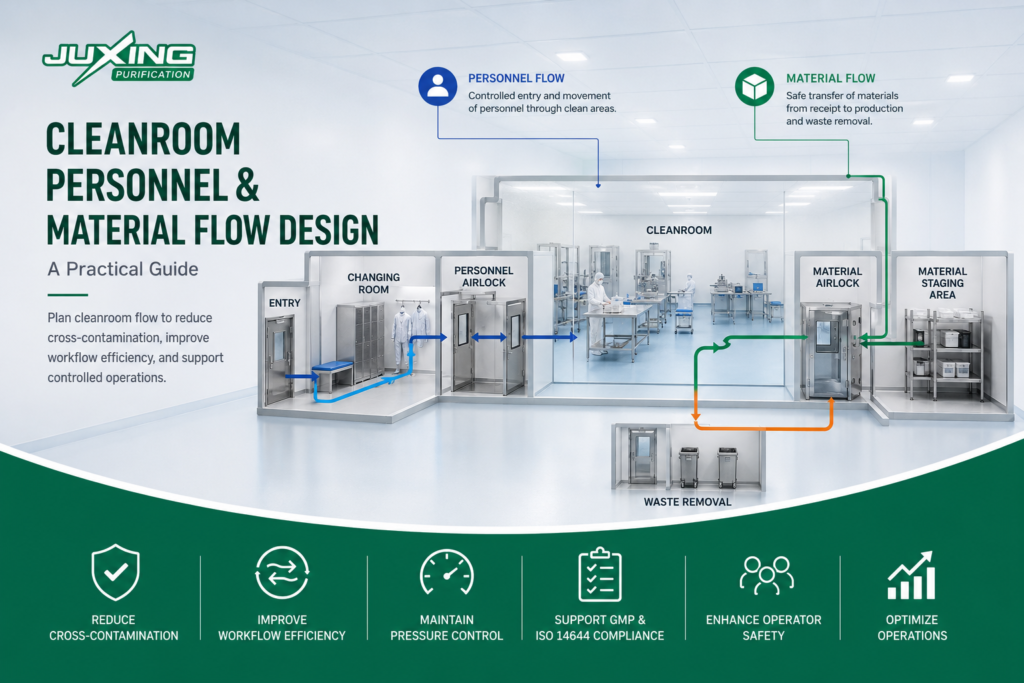
cleanroom personnel and material flow design a complete practical guide

Cleanroom Personnel and Material Flow Design: A Practical Guide

Introduction Cleanroom contamination control depends not only on HEPA filtration, differential pressure, and room classification. It also depends on how people, materials, equipment, waste, and products move through the facility. A technically capable HVAC system cannot fully compensate for a poorly planned workflow. When clean and unclean routes cross, doors open unnecessarily, operators retrace their

Cleanroom Personnel and Material Flow Design: A Practical Guide Read More »

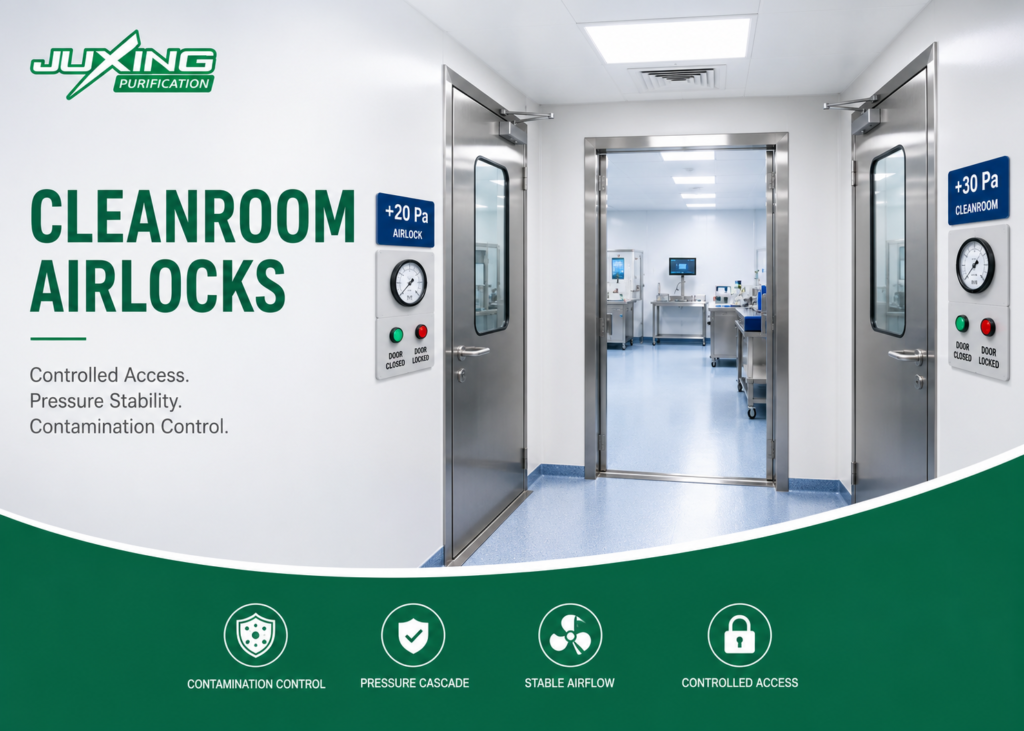
Modern cleanroom airlock with interlocked airtight doors supporting pressure cascade and contamination control

Airlocks in Cleanroom Design: Types, Functions, and Best Practices

Introduction In cleanroom facilities, doors are more than simple access points. Every time a person enters a production area or materials are transferred between rooms, airflow patterns can be disturbed and contaminants may migrate from one controlled zone to another. To minimize these risks, cleanroom designers commonly introduce airlocks between areas of different cleanliness levels

Airlocks in Cleanroom Design: Types, Functions, and Best Practices Read More »