
Quick Answer
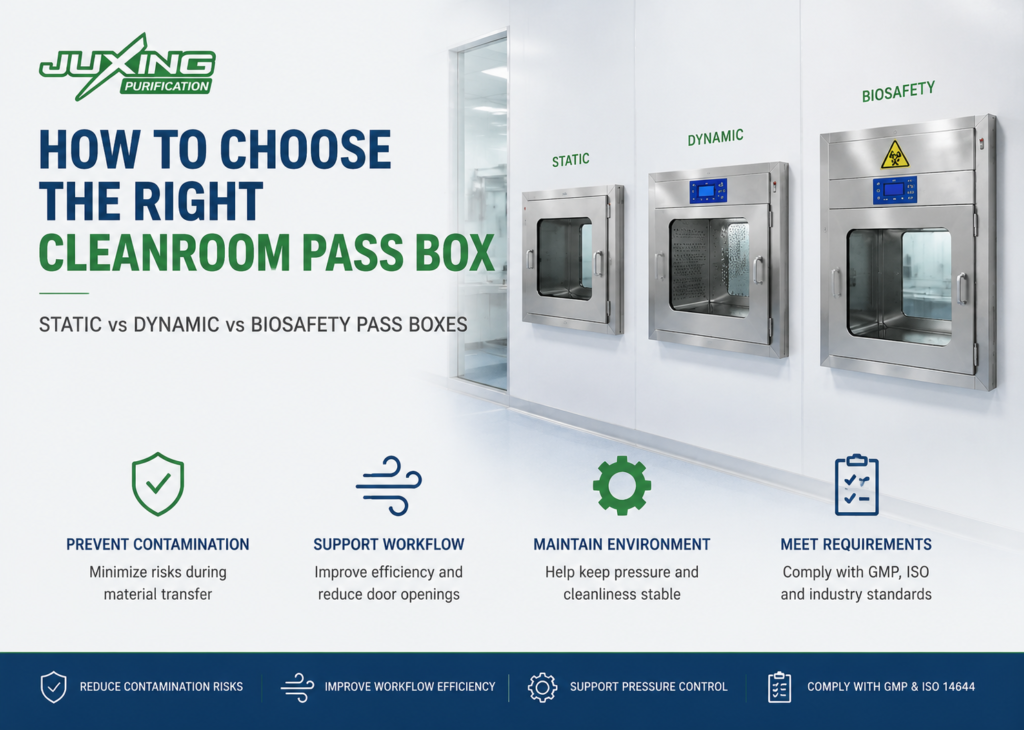
Choosing the right cleanroom pass box depends on the cleanliness classification of the connected rooms, the type of materials being transferred, and the contamination-control strategy of the facility. Static pass boxes are typically suitable for transfers between areas of the same cleanliness level, while dynamic pass boxes incorporate HEPA-filtered airflow to reduce contamination risks during transfer. Biosafety pass boxes are designed for specialized containment applications and should only be selected when required by the project or biosafety regulations.
Key Takeaways
- Static pass boxes are generally used between rooms with similar cleanliness classifications.
- Dynamic pass boxes provide HEPA-filtered airflow for applications requiring additional contamination control.
- Biosafety pass boxes are designed for containment rather than general cleanroom material transfer.
- The appropriate pass box depends on workflow, cleanliness level, pressure strategy, and project requirements.
- Selecting a more complex pass box than necessary may increase costs without improving overall cleanroom performance.
Introduction
Material transfer is one of the most common sources of contamination in controlled environments. Every time a door is opened and personnel move between rooms, the risk of introducing particles or microorganisms increases. A cleanroom pass box provides a controlled transfer point that allows materials to move between adjacent rooms while minimizing unnecessary personnel traffic.
However, not every project requires the same type of pass box. Static, dynamic, and biosafety pass boxes are designed for different applications, and choosing the wrong type may increase project costs without providing additional benefits—or, conversely, may fail to meet contamination-control requirements.
This guide explains the differences between the main types of cleanroom pass boxes, their typical applications, and the key factors engineers and buyers should consider before making a selection.
What Is a Cleanroom Pass Box?
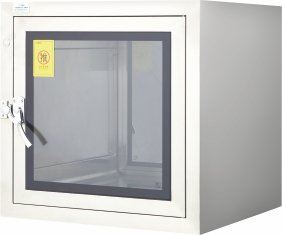
A cleanroom pass box is a transfer chamber installed between two adjacent controlled areas. It allows materials to be transferred without requiring personnel to enter another room directly.
Most pass boxes include:
- Interlocking doors
- Smooth hygienic surfaces
- Observation windows
- Stainless steel interior
- Easy-to-clean construction
Their primary purpose is to reduce contamination risks by minimizing personnel movement while supporting an organized material flow.
Why Are Pass Boxes Important in Cleanroom Design?
Cleanroom performance depends not only on air filtration but also on operational workflow.
A properly selected pass box helps:
- Reduce unnecessary door openings
- Minimize personnel movement
- Support pressure-control strategies
- Improve workflow efficiency
- Reduce cross-contamination risks
Pass boxes should therefore be considered as part of the overall cleanroom design rather than as standalone equipment.
What Is a Static Pass Box?
A static pass box is the simplest and most widely used type.
It does not contain a fan or HEPA filter. Materials are transferred through the chamber while the interlocking door system prevents both doors from opening simultaneously.
Static pass boxes are commonly used:
- Between rooms with similar cleanliness classifications
- Between clean corridors and production rooms
- For non-critical material transfer
- Where the project does not require filtered airflow within the chamber
Because of their simple construction, static pass boxes generally require less maintenance.
What Is a Dynamic Pass Box?
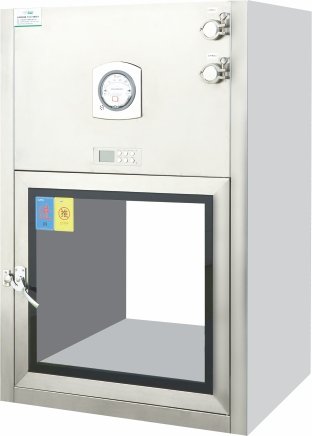
A dynamic pass box incorporates HEPA-filtered airflow to help maintain a cleaner transfer environment during material exchange.
Typical features include:
- HEPA filtration
- Integrated fan system
- Continuous or intermittent airflow
- Pressure monitoring (depending on design)
Dynamic pass boxes are commonly selected when transferring materials between rooms with different cleanliness requirements or where additional contamination control is desired.
It is important to note that a dynamic pass box does not replace the cleanroom HVAC system. It supports contamination control during the transfer process but functions as only one component of the overall cleanroom strategy.
What Is a Biosafety Pass Box?
Biosafety pass boxes are designed for applications requiring containment in addition to contamination control.
Depending on the laboratory or process, they may include:
- Biological decontamination functions
- Integrated disinfection systems
- Airtight sealing
- Specialized airflow configurations
These units are commonly specified for certain biosafety laboratories or high-containment facilities rather than for standard pharmaceutical or electronics cleanrooms.
Selection should always follow the applicable biosafety regulations and project requirements.
When Is a VHP Pass Box Required?
Some pharmaceutical and biotechnology facilities require pass boxes equipped with Vaporized Hydrogen Peroxide (VHP) decontamination systems.
Unlike standard static or dynamic pass boxes, VHP pass boxes are intended to decontaminate the transfer chamber before materials enter highly controlled environments.
Because VHP systems involve process validation, cycle control, and safety considerations, they should only be specified where required by the process or regulatory expectations.
How Should You Choose the Right Pass Box?
Before selecting a pass box, consider the following questions.
What Are the Cleanliness Levels?
Determine whether the connected rooms have similar or different cleanliness classifications.
What Materials Will Be Transferred?
Different transfer requirements may influence the need for filtered airflow or decontamination.
Is Additional Airflow Required?
Not every transfer requires HEPA-filtered airflow.
Dynamic systems should be selected based on engineering requirements rather than assumptions.
Does the Process Require Decontamination?
If the transfer process requires validated surface decontamination, a VHP pass box may be appropriate.
How Will the Unit Be Maintained?
Routine maintenance should include door interlocks, seals, filters (if applicable), and cleaning procedures.
Buyer’s Checklist
Before requesting quotations, confirm:
☐ Static or dynamic design
☐ Chamber dimensions
☐ Door interlock type
☐ Housing material
☐ HEPA filter grade (if applicable)
☐ Airflow requirements
☐ Observation window specification
☐ Installation orientation
☐ Power requirements
☐ Compliance with project specifications
Common Misconceptions
Every Cleanroom Needs a Dynamic Pass Box
No.
Many cleanrooms operate effectively with static pass boxes when project conditions permit.
Dynamic Pass Boxes Can Replace HVAC Systems
Incorrect.
They provide localized contamination control during transfer but do not replace room ventilation or pressure control.
Biosafety Pass Boxes Are Better for Every Project
Not necessarily.
They are intended for specialized containment applications and are generally unnecessary for standard cleanroom projects.
Larger Pass Boxes Are Always Better
Oversized chambers may increase installation costs and occupy valuable wall space without improving operational efficiency.
Expert Tip
When requesting quotations, describe the transfer process instead of asking only for a “dynamic pass box.” Information such as room classification, pressure relationship, transferred materials, transfer frequency, and cleaning procedures allows suppliers to recommend a more appropriate solution.
Frequently Asked Questions
What is the difference between a static and a dynamic pass box?
A static pass box does not include filtered airflow, while a dynamic pass box incorporates HEPA-filtered airflow to provide additional contamination control during material transfer.
Does every GMP cleanroom require a dynamic pass box?
No. The selection depends on the process, cleanliness requirements, and engineering design rather than GMP alone.
What is a biosafety pass box used for?
It is designed for containment applications where biological safety requirements go beyond standard cleanroom material transfer.
Can a VHP pass box replace manual disinfection?
It depends on the validated process. VHP systems are typically used where automated decontamination is specified as part of the facility design and operational procedures.
Which pass box is best?
There is no universal answer. The appropriate choice depends on the facility’s workflow, cleanliness classification, contamination-control strategy, and project requirements.
Conclusion
Cleanroom pass boxes are essential components of material-transfer systems, helping reduce contamination risks while supporting efficient workflow. Static, dynamic, biosafety, and VHP pass boxes each serve different purposes, and selecting the appropriate type requires consideration of room classification, material flow, contamination-control objectives, and applicable regulations. By understanding these differences, buyers and engineers can specify equipment that supports both operational efficiency and long-term cleanroom performance.