
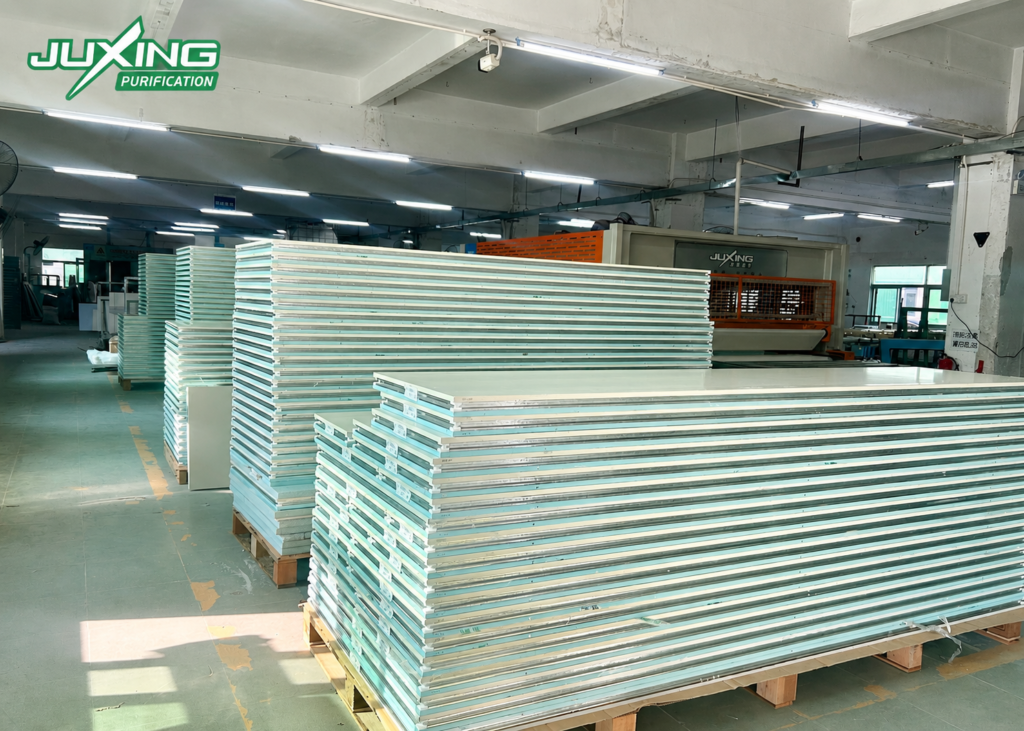
Executive Summary
Cleanroom wall panels are more than interior partitions. They form part of the contamination control system, supporting hygiene, durability, airtightness, and long-term maintenance.
Selecting the wrong wall system can lead to higher maintenance costs, poor cleanability, installation delays, and reduced cleanroom performance.
This guide explains the most important considerations when choosing wall panels for hospitals, pharmaceutical facilities, laboratories, medical device manufacturing, electronics production, and other controlled environments.
Who Should Read This Guide?
- Hospital project managers
- Pharmaceutical EPC contractors
- Cleanroom contractors
- Architects
- Procurement managers
- Healthcare consultants
- Laboratory planners
Why Wall Panels Matter
A cleanroom wall system affects:
- Cleanability
- Airtightness
- Durability
- Infection control
- Maintenance
- Future modifications
- Appearance
Unlike conventional gypsum walls, modular wall systems are designed for controlled environments where contamination control and operational efficiency are essential.
Common Cleanroom Wall Panel Materials
Powder-Coated Galvanized Steel
Advantages
- Excellent value
- Smooth surface
- Easy cleaning
- Good durability
- Wide color options
Typical applications
- Pharmaceutical
- Electronics
- Medical device manufacturing
Stainless Steel
Advantages
- Excellent corrosion resistance
- Suitable for aggressive cleaning agents
- Hygienic finish
Typical applications
- Hospital operating theaters
- Bio laboratories
- Food processing
HPL Panels
Advantages
- Decorative
- Impact resistant
- Easy maintenance
Typical applications
- Hospital corridors
- Laboratory support areas
- Selected healthcare interiors
Glass Wall Systems
Advantages
- Visibility
- Modern appearance
- Natural light
Typical applications
- Laboratories
- GMP observation areas
- Pharmaceutical production
What Buyers Should Compare
Instead of asking:
Which wall panel is best?
Ask:
- Which material matches my environment?
- What cleaning chemicals will be used?
- Is future expansion planned?
- What installation method is required?
- How will utilities be integrated?
Modular Wall Panel Features
Typical modular systems include:
- Flush joints
- Concealed fixing
- Rounded corners
- Utility integration
- Easy maintenance access
- Replaceable panels
Wall Panel Specification Snapshot
| Item | What to Check |
|---|---|
| Material | Steel / Stainless Steel / HPL |
| Surface Finish | Powder coating / Brushed SS |
| Panel Thickness | Project dependent |
| Joint Design | Flush / Sealed |
| Fire Performance | Project requirement |
| Utility Integration | Electrical, Medical Gas |
| Cleaning Compatibility | Daily disinfectants |
Steel vs Stainless Steel
| Feature | Powder-Coated Steel | Stainless Steel |
|---|---|---|
| Cost | Lower | Higher |
| Corrosion Resistance | Good | Excellent |
| Appearance | Painted finish | Metallic finish |
| Maintenance | Easy | Easy |
| Hospital Use | Very common | Critical areas |
Common Planning Mistakes
- Choosing materials based only on price
- Ignoring maintenance requirements
- Not planning medical gas integration
- Forgetting future expansion
- Selecting incompatible door and wall systems
Buyer Checklist
Before requesting quotations:
✓ Wall material
✓ Panel thickness
✓ Room dimensions
✓ Ceiling type
✓ Door type
✓ Utility integration
✓ Fire requirements
✓ Cleaning procedure
✓ Local regulations
FAQ
Are stainless steel wall panels always necessary?
No. Powder-coated galvanized steel is widely used and suitable for many hospital and pharmaceutical projects when correctly specified.
Can wall panels be removed for future renovation?
Many modular systems are designed for easier modification compared with conventional construction.
Can utilities be integrated inside the wall?
Yes. Electrical wiring, medical gases, and communication systems are commonly integrated into modular wall systems.
Final Thoughts
Choosing the right cleanroom wall system is about balancing hygiene, durability, engineering integration, maintenance, and lifecycle cost.
The best wall panel is not necessarily the most expensive one—it is the system that best matches the operational requirements of the facility.
A well-designed modular wall system contributes to cleaner environments, easier maintenance, and more efficient project delivery.
Need Help Choosing a Cleanroom Wall System?
Juxing Purification Technology provides modular wall systems for operating theaters, pharmaceutical cleanrooms, laboratories, and industrial facilities. Our engineering team can recommend wall panel solutions based on your project requirements, helping you achieve long-term performance while maintaining cost efficiency.