
Quick Answer
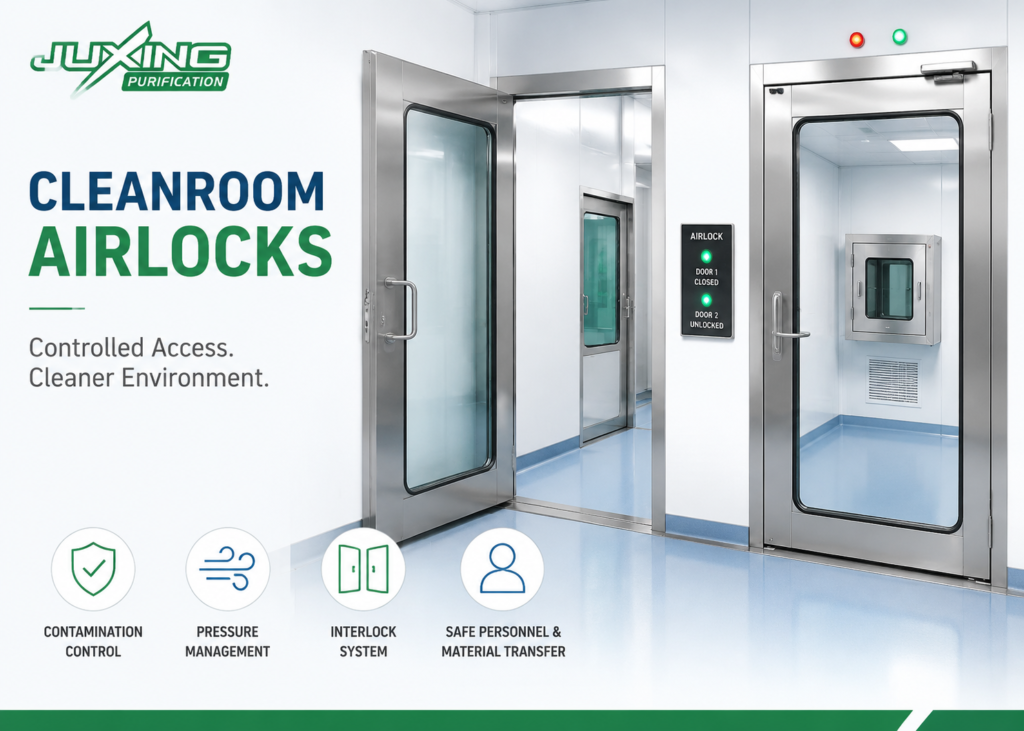
A cleanroom airlock is a controlled transition space between two areas with different cleanliness classifications or pressure conditions. It helps reduce contamination risks by limiting direct airflow exchange, supporting pressure control, and managing personnel or material movement. Depending on the application, airlocks may be designed for personnel, materials, or specific contamination-control requirements.
Key Takeaways
- Airlocks help maintain cleanroom pressure differentials.
- Personnel and material airlocks serve different operational purposes.
- An airlock is not the same as a pass box.
- Proper door interlocking improves contamination control.
- Airlock design should follow workflow, cleanliness classification, and project requirements.
Introduction
Controlling contamination involves much more than installing HEPA filters or maintaining room cleanliness. One of the most effective ways to reduce contamination risks is to control how people, materials, and air move between adjacent areas.
A cleanroom airlock provides a transition zone that helps reduce uncontrolled airflow exchange while supporting pressure control and organized workflow. Whether used in pharmaceutical manufacturing, biotechnology laboratories, hospitals, or electronics facilities, properly designed airlocks contribute to stable cleanroom performance and regulatory compliance.
This guide explains the different types of cleanroom airlocks, how they work, where they are used, and the key factors buyers should consider during project planning.
What Is a Cleanroom Airlock?
A cleanroom airlock is an enclosed transition space located between two rooms with different environmental conditions.
Unlike a standard doorway, an airlock uses controlled entry and exit procedures to reduce direct air exchange and support contamination control.
Most cleanroom airlocks include:
- Two or more interlocked doors
- Controlled access
- Pressure management
- Easy-to-clean finishes
- Integration with cleanroom wall systems
Their primary objective is to maintain environmental separation while allowing safe movement of personnel or materials.
Why Are Airlocks Important?
Every time a door opens between two rooms, air naturally flows from the higher-pressure area to the lower-pressure area.
Without an airlock, this airflow may introduce unwanted particles or disturb the intended pressure cascade.
Properly designed airlocks help:
- Reduce cross-contamination
- Support differential pressure
- Organize personnel movement
- Improve workflow
- Protect cleanroom classification
What Types of Cleanroom Airlocks Are Available?
Personnel Airlock
Personnel airlocks are designed for operators entering or leaving controlled environments.
Typical features include:
- Gowning space
- Shoe changing
- Hand hygiene facilities
- Interlocked doors
These airlocks help ensure personnel follow the correct contamination-control procedures before entering clean areas.
Material Airlock
Material airlocks are intended for transferring equipment or supplies between rooms.
Unlike pass boxes, material airlocks are large enough for personnel to enter when moving carts, equipment, or bulky materials.
Bubble Airlock
A bubble airlock maintains a higher pressure than the adjacent rooms.
It helps prevent contaminants from entering the protected area.
Bubble airlocks are commonly used in sterile pharmaceutical production.
Sink Airlock
A sink airlock maintains a lower pressure than surrounding rooms.
This configuration helps contain hazardous contaminants within the controlled area.
Sink airlocks are commonly found in containment laboratories.
How Does an Airlock Support Pressure Control?
Pressure control depends on the complete HVAC design rather than on the airlock alone.
However, the airlock plays an important supporting role by:
- Limiting simultaneous door openings
- Reducing uncontrolled airflow
- Supporting pressure recovery
- Maintaining room separation
Airlock vs Pass Box: What’s the Difference?
Although both reduce contamination risks, they serve different purposes.
| Airlock | Pass Box |
|---|---|
| Designed for people or large materials | Designed for material transfer only |
| Personnel may enter | Personnel do not enter |
| Larger enclosed space | Compact transfer chamber |
| Supports pressure transition | Supports contamination-controlled transfer |
| Integrated into room layout | Installed within partition walls |
This distinction is often misunderstood during early project planning.
How Should You Design a Cleanroom Airlock?
When designing an airlock, consider:
Workflow
Understand how personnel and materials move throughout the facility.
Pressure Strategy
Confirm the intended pressure relationship between adjacent rooms.
Door Configuration
Determine whether swing or sliding doors are appropriate for the available space and operational needs.
HVAC Integration
Ensure the ventilation system supports the intended pressure cascade.
Cleaning and Maintenance
Select finishes and hardware that withstand routine cleaning and facilitate long-term maintenance.
Buyer’s Checklist
Before requesting quotations, confirm:
☐ Personnel or material airlock
☐ Room classifications
☐ Pressure relationship
☐ Door type
☐ Door interlock system
☐ Wall compatibility
☐ HVAC coordination
☐ Cleaning requirements
☐ Applicable regulations
☐ Future maintenance
Common Misconceptions
An Airlock Is the Same as a Pass Box
No.
A pass box transfers materials through a chamber, whereas an airlock provides a controlled transition space for personnel or larger materials.
Every Airlock Must Be Positive Pressure
Incorrect.
Some airlocks are intentionally maintained at negative pressure to support containment strategies.
Airlocks Replace HVAC Systems
No.
Airlocks assist contamination control, but pressure stability depends on the complete HVAC system.
Two Doors Automatically Create an Airlock
Not necessarily.
An effective airlock requires appropriate pressure control, interlocking, and operational procedures.
Expert Tip
During project discussions, don’t specify only the airlock dimensions. Provide the intended workflow, room classifications, pressure relationships, and operational procedures. These factors have a greater influence on airlock design than size alone.
Frequently Asked Questions
What is the purpose of a cleanroom airlock?
It provides a controlled transition space that helps reduce contamination risks and supports pressure management.
What is the difference between an airlock and a pass box?
An airlock is designed for personnel or larger material movement, while a pass box is intended for transferring materials through a small chamber.
What is a bubble airlock?
A bubble airlock maintains a higher pressure than surrounding rooms to help prevent contaminants from entering the protected area.
What is a sink airlock?
A sink airlock operates at a lower pressure than adjacent rooms to help contain hazardous contaminants.
Do all cleanrooms require airlocks?
No. The need for an airlock depends on the facility layout, contamination-control strategy, regulatory requirements, and project design.
Conclusion
Cleanroom airlocks are essential transition spaces that support contamination control by managing the movement of people, materials, and air between controlled environments. Whether designed for personnel, materials, or specialized containment, an effective airlock contributes to stable pressure control, organized workflow, and long-term cleanroom performance.
Selecting the appropriate airlock requires more than choosing dimensions. Engineers and buyers should evaluate workflow, pressure strategy, door configuration, HVAC coordination, and operational requirements to ensure the airlock integrates effectively into the overall cleanroom design.