
Quick Answer
Cleanroom change control is a formal process used to evaluate, approve, implement, verify, and close modifications that could affect a cleanroom’s qualified state, contamination-control strategy, regulatory compliance, safety, or intended performance.
Changes requiring assessment may include:
- HVAC modifications
- HEPA filter replacement
- Pressure-setpoint changes
- Cleanroom layout alterations
- New doors, pass boxes, or penetrations
- Equipment installation or relocation
- Monitoring-system changes
- Software or control-logic updates
- Changes in occupancy or room use
- Major maintenance
- Material or supplier substitutions
- Revised cleaning or operating procedures
The change should be assessed before implementation whenever possible. The assessment should identify affected requirements, risks, documents, systems, tests, responsibilities, and release conditions.
Change control is complete only after the modification has been implemented as approved, required verification or requalification has been successfully completed, documents have been updated, deviations have been resolved, and the effectiveness of the change has been confirmed.
Key Takeaways
- Cleanroom changes should be evaluated before implementation, not documented only after the work is complete.
- Change control protects the qualified state by connecting each proposed modification to its potential technical, operational, quality, and regulatory effects.
- The scope of assessment should consider both direct effects and indirect effects on connected rooms and systems.
- A “like-for-like” replacement still requires documented evaluation.
- Risk classification should determine the level of review, testing, approval, and requalification.
- Change control, deviation management, CAPA, maintenance, and project management are related but not interchangeable.
- Acceptance criteria and verification requirements should be defined before implementation.
- Significant cleanroom or HVAC modifications may require partial or full requalification.
- Temporary and emergency changes must remain controlled, time-limited, and traceable.
- Change closure should be based on objective evidence rather than completion of physical work alone.
Introduction
Cleanrooms are integrated systems. A modification that appears minor in one location may affect environmental control elsewhere.
Replacing a door can change room leakage and pressure stability. Installing new process equipment can increase heat load, disturb airflow, or block a return-air path. Adjusting one room’s supply volume can change the pressure relationship of several connected rooms. Replacing a pressure sensor can affect alarms, monitoring data, and automated control.
These effects are not always visible immediately.
A modified cleanroom may continue to operate without obvious problems while:
- Pressure margins have become smaller.
- Recovery time has increased.
- Airflow no longer protects a critical location.
- An alarm is connected to the wrong sensor.
- A new penetration has not been sealed correctly.
- Monitoring limits no longer match operating setpoints.
- Drawings and maintenance instructions no longer represent the facility.
- Previous qualification evidence no longer reflects the installed configuration.
A structured change-control process helps identify these risks before the modified facility is returned to unrestricted operation.
EU GMP Annex 15 states that planned changes that may affect product quality should be formally documented and their impact on the validated status or control strategy assessed. It also requires quality risk management to be used when determining the potential effects of a change and any necessary verification, validation, or requalification.
Although Annex 15 applies specifically within pharmaceutical GMP, the same lifecycle principles are valuable for hospitals, laboratories, medical-device facilities, electronics cleanrooms, food-production areas, and other controlled environments.
What Is Cleanroom Change Control?
Cleanroom change control is a documented system through which qualified representatives review and manage proposed modifications that may affect the performance or approved status of a cleanroom.
A complete change-control process normally includes:
- Initiation
- Description of the current and proposed condition
- Preliminary screening
- Impact assessment
- Risk assessment
- Classification
- Implementation planning
- Approval
- Controlled execution
- Verification
- Effectiveness review
- Final closure
Its purpose is not to prevent change.
Its purpose is to ensure that necessary changes are introduced without creating uncontrolled effects on:
- Product quality
- Patient safety
- Operator safety
- Contamination control
- Cross-contamination control
- Containment
- Cleanroom classification
- Pressure relationships
- Environmental monitoring
- Equipment reliability
- Regulatory compliance
- Documentation
- The qualified or validated state
Why Is Change Control Important for Cleanrooms?
Cleanroom systems are interconnected
Cleanroom performance depends on the interaction of:
- Architecture
- HVAC
- Filtration
- Room pressure
- Doors
- Airlocks
- Pass boxes
- Utilities
- Equipment
- Monitoring
- Automation
- Cleaning
- Personnel behavior
- Material movement
- Maintenance
Changing one element can affect several others.
For example, adding an exhaust connection may reduce room pressure. Increasing supply airflow to restore the pressure may change the balance of adjacent rooms. The revised airflow may then affect door opening forces, alarm frequency, temperature control, and filter loading.
A change-control review should identify this chain of effects.
Previous qualification evidence may become invalid
Qualification results are valid for a defined configuration and set of operating conditions.
If the configuration changes, the project must determine:
- Which previous evidence remains valid
- Which evidence requires review
- Which tests should be repeated
- Whether new risks have been introduced
- Whether revised acceptance criteria are necessary
- Whether the facility can remain in operation during implementation
Without change control, a facility may continue to claim a qualified status based on a system that no longer exists in its tested form.
Documentation can become disconnected from reality
Uncontrolled changes commonly lead to differences between the installed facility and its documentation.
Affected documents may include:
- Layout drawings
- HVAC schematics
- Pressure-cascade diagrams
- Room data sheets
- Filter schedules
- Instrument lists
- Input/output lists
- Control narratives
- Alarm lists
- Equipment manuals
- Maintenance procedures
- Cleaning procedures
- Monitoring plans
- Qualification records
- Training materials
When documents are inaccurate, future maintenance, investigations, qualification, and expansion become more difficult and less reliable.
Is Change Control Required for Every Cleanroom?
The formal requirements depend on the applicable industry and quality system.
In pharmaceutical manufacturing, change control is an established part of the pharmaceutical quality system. EU GMP Annex 15 specifically addresses changes that may affect product quality, documentation, validation, regulatory status, calibration, maintenance, or other systems.
For sterile medicinal-product facilities, EU GMP Annex 1 also requires changes to contamination-control systems to be assessed for their impact before and after implementation. Changes to cleanroom design, HVAC operating parameters, airflow, or final filters may require requalification.
Other facilities may not use pharmaceutical terminology, but the same process may be called:
- Engineering change control
- Configuration management
- Management of change
- Design-change review
- Facility-modification approval
- Technical change request
- Infection-control risk assessment
- Safety change review
Regardless of the name, significant modifications should not be implemented without understanding their potential consequences.
What Is the Difference Between Change Control and a Deviation?
A change is normally planned. A deviation is an unplanned departure from an approved requirement, instruction, condition, or expected result.
| Change control | Deviation |
|---|---|
| Usually initiated before implementation | Recorded after or when an unexpected event occurs |
| Evaluates a proposed modification | Investigates a departure or failure |
| Defines the future approved state | Determines what happened and its impact |
| Includes implementation and verification plans | Includes investigation and disposition |
| May require qualification or validation | May result in CAPA or change control |
The two processes may interact.
For example, repeated room-pressure deviations may lead to an investigation. The investigation may identify an undersized return-air path. Modifying the ductwork would then require an approved change control.
A deviation should not be disguised as a change merely to avoid investigation.
What Is the Difference Between Change Control and CAPA?
Corrective and Preventive Action addresses causes of actual or potential problems. Change control manages the controlled implementation of the proposed solution.
For example:
- A HEPA integrity test fails.
- A deviation is opened.
- The investigation identifies damage caused by an unsuitable maintenance method.
- CAPA requires filter replacement and a revised maintenance procedure.
- Change control manages the replacement, document revision, training, testing, and return to service.
CAPA explains why action is necessary. Change control ensures that the action is implemented without creating new risks.
What Is the Difference Between Change Control and Maintenance?
Routine maintenance follows an approved, predefined program. Change control evaluates modifications to the approved facility, equipment, system, or method.
Examples of routine maintenance may include:
- Replacing a belt with the approved part
- Lubricating a bearing
- Cleaning a coil
- Replacing a standard prefilter
- Calibrating an instrument
- Inspecting door gaskets
However, maintenance may require change control when it involves:
- A different component specification
- A new supplier or material
- Altered dimensions
- Revised operating parameters
- Changed control logic
- Relocated equipment
- Modified maintenance frequency
- A new repair method
- Temporary bypass of a critical function
- Work that could affect the qualified state
The site should define the boundary between routine maintenance and controlled change.
Which Cleanroom Changes Should Be Assessed?
Facility and envelope changes
Examples include:
- Moving or adding walls
- Modifying ceilings
- Changing floor systems
- Adding doors or windows
- Relocating pass boxes
- Adding service penetrations
- Replacing sealant systems
- Modifying coving
- Changing panel materials
- Repairing extensive envelope damage
- Changing maintenance-access routes
Potential effects include room leakage, cleanability, contamination traps, pressure stability, fire performance, maintenance access, and material compatibility.
HVAC changes
Examples include:
- Replacing an AHU
- Changing fan capacity
- Modifying ductwork
- Adding supply or return terminals
- Relocating HEPA filters
- Changing filter grade
- Adding exhaust
- Changing recirculation
- Revising fresh-air quantity
- Modifying pressure setpoints
- Adjusting airflow quantities
- Changing temperature or humidity limits
- Updating control sequences
HVAC changes often affect more than one room and require a system-level assessment.
Equipment changes
Examples include:
- Installing new process equipment
- Relocating existing equipment
- Increasing equipment capacity
- Adding heat-generating equipment
- Changing equipment dimensions
- Replacing containment equipment
- Adding mobile equipment
- Changing cleaning requirements
- Adding utility connections
The review should consider airflow obstruction, heat load, personnel movement, material flow, cleaning access, maintenance access, utility capacity, and contamination generation.
Door, airlock, and pass-box changes
Examples include:
- Replacing a hinged door with a sliding door
- Changing door seals
- Reversing the opening direction
- Changing automatic-door timing
- Modifying airlock interlocks
- Changing emergency-release logic
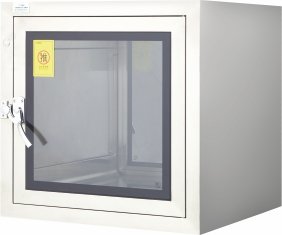
- Installing a new pass box
- Modifying pass-box disinfection functions
- Changing access-control permissions
These modifications may affect pressure control, segregation, safety, workflow, and emergency operation.
Monitoring and control-system changes
Examples include:
- Replacing sensors
- Changing sensor locations
- Changing alarm limits
- Changing alarm delays
- Updating software
- Modifying input/output mapping
- Changing trend intervals
- Adding remote access
- Replacing BMS or EMS components
- Changing report formats
- Modifying user permissions
- Updating time synchronization
The assessment should consider data integrity, alarm effectiveness, configuration control, calibration, historical-data continuity, and cybersecurity where relevant.
Operational changes
Examples include:
- Increasing occupancy
- Changing shifts
- Changing room use
- Introducing a new product
- Changing gowning practices
- Revising cleaning methods
- Changing disinfectants
- Changing material routes
- Increasing door-opening frequency
- Changing waste-removal procedures
- Modifying maintenance practices
A cleanroom may require reassessment even when no physical component has changed.
Should Like-for-Like Replacement Require Change Control?
A like-for-like replacement means replacing a component with one that is equivalent in relevant characteristics.
However, “like-for-like” should be demonstrated rather than assumed.
The comparison may need to consider:
- Manufacturer
- Model
- Dimensions
- Materials
- Capacity
- Accuracy
- Operating range
- Filter efficiency
- Pressure drop
- Surface finish
- Electrical rating
- Software version
- Communication protocol
- Spare-part compatibility
- Maintenance requirements
- Certificates
- Regulatory status
For example, two H14 filters may have the same face dimensions but different depths, pressure drops, airflow capacities, seal designs, or recommended operating limits.
The replacement may qualify for a simplified change process, but the assessment and verification should remain documented.
What Are the Main Steps in Cleanroom Change Control?
Step 1: Clearly Describe the Proposed Change
The change request should state:
- What will change
- Why the change is necessary
- Current condition
- Proposed condition
- Systems and rooms involved
- Expected benefit
- Planned implementation date
- Requested completion date
- Initiator
- Supporting documents
Vague descriptions such as “modify HVAC,” “replace filter,” or “improve pressure” are insufficient.
A clear description might state:
Replace the existing terminal H14 filter in Room 2-14 with the proposed model, using the same external housing dimensions and gel-seal arrangement. The new filter has a higher nominal airflow resistance. Rebalance the terminal airflow after installation while maintaining the approved room-pressure cascade.
This allows reviewers to identify the technical consequences.
Step 2: Define the Current Approved Baseline
The assessment should identify the current approved state before deciding how it may be affected.
Relevant baseline information may include:
- Approved user requirements specification
- Current drawings
- Equipment and filter schedules
- Room classification
- Pressure setpoints
- Airflow quantities
- Alarm limits
- Qualified occupancy
- Current process
- Existing qualification evidence
- Approved procedures
- Current software and configuration versions
Without a defined baseline, it is difficult to determine what is actually changing.
Step 3: Perform Preliminary Screening
Preliminary screening determines:
- Whether formal change control is required
- Which departments should participate
- Whether external approval is necessary
- Whether production must stop
- Whether immediate risk controls are needed
- Whether the change may affect regulatory commitments
- Whether the change should be managed as a project
Simple changes may proceed through a streamlined route. Complex changes may require detailed engineering, validation, and regulatory planning.
Step 4: Conduct a Multidisciplinary Impact Assessment
The impact assessment should include people who understand the affected system and its use.
Depending on the change, participants may include:
- Cleanroom engineering
- HVAC specialists
- Production or clinical users
- Quality assurance
- Validation
- Maintenance
- Microbiology
- Environmental monitoring
- Health and safety
- Infection control
- Information technology
- Automation
- Procurement
- Supplier or contractor
- Regulatory affairs
- Project management
One person should coordinate the assessment, but no single discipline should make assumptions for all others.
Step 5: Perform a Risk Assessment
The risk assessment should identify:
- What could go wrong
- Which controls may be affected
- Potential consequences
- Probability of failure
- Detectability
- Existing controls
- Additional controls
- Verification needed
- Residual risk
The formality should match the significance and complexity of the change.
A simple documented assessment may be suitable for a minor equivalent replacement. A complex HVAC or layout change may require a detailed FMEA, airflow study, or contamination-risk assessment.
The assessment should follow the principles described in the cleanroom risk assessment guide.
Step 6: Classify the Change
Organizations may classify changes as:
- Minor
- Major
- Critical
However, no universal classification definition applies to every facility. The organization should define its own criteria.
Possible minor change
A change with limited impact that does not alter a critical design or operating parameter and can be verified through inspection or a focused check.
Example:
- Replacing a noncritical light fitting with an approved equivalent
Possible major change
A change that may affect the qualified state, contamination control, system performance, documentation, or several connected functions.
Example:
- Replacing a terminal HEPA filter with a different model
Possible critical change
A change with potentially significant effects on product, patient, operator safety, sterility assurance, containment, or regulatory compliance.
Example:
- Redesigning the airflow system serving an aseptic processing area
The final classification should depend on actual impact, not only on the physical size or cost of the modification.
Step 7: Define the Implementation Plan
The implementation plan should specify:
- Approved design
- Work sequence
- Responsible personnel
- Required materials
- Approved suppliers
- Site-access controls
- Contamination-control measures
- Isolation requirements
- Temporary controls
- Required permits
- Cleaning requirements
- Documentation updates
- Training
- Commissioning
- Qualification or testing
- Acceptance criteria
- Return-to-service conditions
For work inside or above a cleanroom, the plan may also need to control:
- Dust generation
- Open ceiling panels
- Exposed ductwork
- Tools and materials
- Personnel entry
- Waste removal
- Protection of nearby equipment
- Post-work cleaning
- Disinfection
- Environmental recovery
- Adjacent-room operation
Step 8: Obtain Approval Before Implementation
The change should be reviewed and approved by the appropriate responsible personnel before work begins.
Approval confirms that:
- The proposed design is acceptable.
- Risks have been assessed.
- Responsibilities are assigned.
- Necessary controls are planned.
- Test requirements are defined.
- Acceptance criteria are approved.
- Regulatory implications have been considered.
- Required resources are available.
Commercial urgency should not replace technical and quality approval.
Step 9: Implement the Change Under Control
The change should be executed according to the approved plan.
During implementation, the team should record:
- Actual work performed
- Components installed
- Serial and model numbers
- Materials used
- Supplier certificates
- Inspection results
- Software versions
- Configuration changes
- Calibration records
- Photographs where useful
- Unexpected conditions
- Deviations from the plan
If the work must differ from the approved plan, the difference should be assessed before proceeding whenever practical.
A change should not become a series of undocumented field decisions.
Step 10: Verify and Qualify the Modified System
Verification should demonstrate that the change was implemented correctly and did not create unacceptable effects.
Possible methods include:
- Document review
- Visual inspection
- Dimensional measurement
- Material verification
- Calibration
- Point-to-point testing
- Alarm challenge
- Interlock testing
- Airflow measurement
- Pressure verification
- HEPA integrity testing
- Particle classification
- Recovery testing
- Airflow visualization
- Temperature and humidity testing
- Microbiological assessment
- Operational simulation
- Training-record review
The required scope depends on the impact assessment.
Step 11: Update Documents and Train Personnel
Change control should identify every document affected by the modification.
Updates may include:
- As-built drawings
- Room data sheets
- Equipment lists
- Filter schedules
- Instrument lists
- Control narratives
- Alarm lists
- Maintenance procedures
- Calibration procedures
- Cleaning procedures
- Operating procedures
- Emergency procedures
- Monitoring plans
- Risk assessments
- Qualification records
- Spare-parts lists
- Training materials
Affected personnel should be trained before the revised process or system is used.
Step 12: Evaluate Effectiveness and Close the Change
A change should not be closed solely because installation work is complete.
Closure should confirm that:
- The approved work was completed.
- Deviations were resolved.
- Required inspections passed.
- Qualification or verification passed.
- Documents were updated.
- Training was completed.
- Temporary controls were removed or formally extended.
- Open risks were accepted by authorized personnel.
- The system was released for use.
- The intended result was achieved.
Effectiveness may be confirmed immediately or after an appropriate monitoring period.
For example, after modifying room-pressure control, the project may review several weeks of trend and alarm data before confirming that the change was effective.
How Should Change Impact Be Assessed?
A structured assessment should examine several impact categories.
| Impact category | Questions to consider |
| Intended use | Does the room or system still support its approved purpose? |
| Product or patient | Could the change affect quality, safety, or sterility assurance? |
| Contamination | Does it alter particle, microbial, chemical, or cross-contamination risk? |
| HVAC | Does it affect airflow, pressure, filtration, temperature, or humidity? |
| Envelope | Does it affect leakage, sealing, surfaces, or cleanability? |
| Process | Does it affect loads, occupancy, flows, interventions, or exposure? |
| Monitoring | Are sensor locations, limits, alarms, or data handling affected? |
| Utilities | Are capacity, quality, pressure, or connections affected? |
| Safety | Does it affect fire, electrical, emergency, containment, or operator safety? |
| Qualification | Which existing results remain valid and which tests must be repeated? |
| Documentation | Which controlled documents require revision? |
| Training | Which personnel require new or updated training? |
| Regulatory | Does the change affect licences, submissions, commitments, or standards? |
| Supplier | Is a new supplier, component, certificate, or service provider involved? |
| Maintenance | Are procedures, spares, frequency, or access requirements changed? |
Each “no impact” conclusion should be reasonable and supported rather than selected automatically.
How Do You Determine Which Tests Must Be Repeated?
The test scope should follow the affected function.
| Proposed change | Potential impact | Possible verification |
| Final HEPA filter replacement | Integrity, airflow, pressure balance | Filter integrity, airflow, and pressure tests |
| Pressure-sensor replacement | Display, control, alarms, data | Calibration, comparison, alarm challenge |
| Return-air grille relocation | Distribution, recovery, room pressure | Airflow, pressure, recovery, visualization |
| Door-seal replacement | Leakage and pressure stability | Inspection, door function, pressure verification |
| New pass box | Envelope, workflow, interlock, segregation | Installation, sealing, interlock, operational tests |
| New process equipment | Airflow obstruction, heat load, occupancy | Airflow assessment, temperature, pressure, operational test |
| HVAC setpoint change | Cascade, control stability, alarms | Balancing, pressure, alarm and recovery tests |
| BMS software update | Data, alarms, communication, control | Version review, input/output and alarm challenges |
| Wall relocation | Volume, zoning, airflow and classification | Inspection, airflow, pressure and classification |
| New exhaust connection | Containment and room balance | Exhaust volume, pressure, alarm and failure testing |
The requirements traceability matrix can show which approved requirements are affected and where the new evidence is recorded.
When Does a Change Require Requalification?
Requalification may be required when a change affects or could reasonably affect the qualified performance of the cleanroom or its supporting systems.
Possible triggers include:
- Interruption of airflow
- Change to cleanroom design
- HVAC operating-parameter changes
- Replacement of final filters
- Major maintenance
- Room-grade change
- Pressure-cascade modification
- Airflow-path modification
- New critical equipment
- Modified monitoring or alarms
- Extended shutdown
- Correction of an out-of-compliance condition
- Change in intended use
The scope may range from one focused test to extensive qualification.
The decision should be based on impact and risk, following the principles in the cleanroom requalification guide.
Does a Change Require Full Requalification?
Not necessarily.
Focused requalification may be suitable when:
- The affected function is clearly limited.
- Connected systems are understood.
- Existing evidence remains valid.
- The modification is reversible or localized.
- Verification can demonstrate continued control.
Extensive or full requalification may be suitable when:
- The cleanroom layout is substantially changed.
- The HVAC system is redesigned.
- Room classification changes.
- Several critical systems are affected.
- Intended use changes significantly.
- Reliable baseline information is missing.
- The facility has undergone major reconstruction.
- Many accumulated changes have not been adequately assessed.
- The previous qualified state cannot be defended.
The rationale should be documented regardless of the selected scope.
How Should Temporary Changes Be Controlled?
A temporary change is introduced for a limited period and is expected to be reversed or replaced.
Examples include:
- Temporary monitoring equipment
- Temporary airflow adjustment
- Temporary operating restriction
- Temporary repair
- Temporary replacement component
- Temporary route for materials
- Temporary procedural control
A temporary change should identify:
- Reason
- Start date
- Expiry date
- Responsible owner
- Risk assessment
- Temporary controls
- Monitoring requirements
- Operating restrictions
- Restoration plan
- Verification after restoration
- Extension-approval requirements
Temporary changes should not remain open indefinitely.
If the temporary condition becomes permanent, it should undergo the appropriate permanent change-control process.
How Should Emergency Changes Be Managed?
An emergency change may be necessary to protect:
- Personnel
- Product
- Patients
- Environment
- Equipment
- Business continuity
- Facility safety
Examples include an urgent fan replacement, emergency leak repair, or temporary shutdown of a contaminated area.
When prior approval is not practical, the organization should:
- Define who may authorize emergency action.
- Record the reason and immediate risk.
- Apply necessary temporary controls.
- Document the actual work performed.
- Notify appropriate responsible personnel.
- Perform retrospective assessment promptly.
- Complete required verification.
- Review product or operational impact.
- Update documents.
- Formally approve continued operation or restoration.
“Emergency” should not be used to bypass normal planning for predictable work.
How Should Supplier Changes Be Assessed?
Changing a supplier may affect more than price and delivery.
The review should consider:
- Component specification
- Material
- Dimensions
- Performance
- Certification
- Manufacturing method
- Quality-management system
- Traceability
- Packaging
- Transportation
- Storage
- Installation
- Maintenance
- Spare-part availability
- Technical support
- Previous qualification evidence
For cleanroom panels, doors, filters, pass boxes, and monitoring equipment, technically similar products may still differ in characteristics that affect cleanability, leakage, airflow, pressure drop, durability, or integration.
Supplier approval and technical change assessment should therefore be coordinated.
How Should Several Small Changes Be Managed?
A sequence of individually minor modifications may collectively produce a major effect.
Examples include:
- Several airflow adjustments
- Multiple pressure-setpoint changes
- Repeated door replacements
- Addition of several pieces of equipment
- Progressive increase in occupancy
- Multiple sensor relocations
- Several new penetrations
- Repeated temporary repairs
Periodic review should identify cumulative change.
The team should ask:
Does the current cleanroom still match the approved design basis and qualification evidence when all changes are considered together?
If the answer is uncertain, a system-level review or expanded requalification may be necessary.
How Should Change Control Be Included in the VMP?
The validation master plan or equivalent qualification plan should describe:
- The change-control policy
- Roles and responsibilities
- Change classification
- Risk-assessment expectations
- Qualification impact assessment
- Approval requirements
- Documentation requirements
- Requalification strategy
- Deviation handling
- Return-to-service authority
- Effectiveness review
- Periodic review of cumulative changes
The VMP does not need to contain every change-control procedure, but it should explain how changes are managed within the qualification lifecycle.
Buyer’s Checklist
Before approving or closing a cleanroom change, confirm that:
- The proposed change is described clearly.
- The reason and intended benefit are documented.
- The current approved baseline is identified.
- All affected rooms and systems are listed.
- Connected and adjacent systems were considered.
- Appropriate technical and operational personnel participated.
- Product, patient, operator, and contamination risks were assessed.
- HVAC and pressure effects were evaluated.
- Cleanroom-envelope effects were evaluated.
- Monitoring, alarms, and data effects were assessed.
- Utility and safety implications were considered.
- Regulatory impact was evaluated where applicable.
- The change was classified using approved criteria.
- Implementation controls were defined.
- Acceptance criteria were approved before execution.
- Required commissioning and qualification tests were identified.
- Supplier and material changes were assessed.
- Temporary conditions have owners and expiry dates.
- Emergency work received timely retrospective review.
- Actual installed components are recorded.
- Deviations from the approved plan are documented.
- Test instruments were suitable and calibrated.
- Verification and requalification results passed.
- Drawings and controlled documents were updated.
- Affected personnel were trained.
- Open actions and residual risks were approved.
- The effect on previous qualification evidence was assessed.
- The modified system received formal release.
- Change effectiveness was reviewed.
- Cumulative effects with previous changes were considered.
- Final closure is supported by objective evidence.
Common Misconceptions
“Only major construction requires change control.”
Operational, software, setpoint, supplier, monitoring, and procedural changes may affect cleanroom performance even when no construction occurs.
“A like-for-like replacement is not a change.”
Equivalence must be demonstrated. Components with similar names or dimensions may differ in performance, materials, configuration, or maintenance requirements.
“Maintenance work never requires change control.”
Routine work may be managed under approved maintenance procedures. However, non-equivalent replacement, altered settings, major repairs, and work affecting the qualified state require assessment.
“If the room passes particle classification, the change is acceptable.”
Particle classification may not detect problems with filter integrity, airflow distribution, pressure recovery, alarms, interlocks, temperature, humidity, or documentation.
“Quality assurance owns the entire change.”
Quality oversight is important, but technical experts, users, engineering, maintenance, validation, and other affected functions must evaluate impacts within their areas of expertise.
“The change can be closed when installation is finished.”
Closure should also require successful verification, deviation resolution, document updates, training, release, and effectiveness assessment where appropriate.
“Temporary changes need less control.”
Temporary conditions may introduce significant risk because they often rely on procedural or manual controls. They need clear limits, monitoring, ownership, and expiry dates.
“Several minor changes can never become a major change.”
Cumulative modifications can move the facility away from its approved design and qualification basis. Periodic system-level review is necessary.
Expert Tip
Assess every cleanroom change in three directions:
1. Upstream
Ask what supplies, controls, or conditions the changed component depends on.
Examples:
- Electrical power
- Supply airflow
- Control signals
- Utility pressure
- Network communication
2. At the point of change
Ask whether the component itself meets the approved requirement.
Examples:
- Material
- Capacity
- Dimensions
- Accuracy
- Filter efficiency
- Seal design
3. Downstream
Ask which rooms, processes, alarms, documents, or users could be affected.
Examples:
- Adjacent-room pressure
- Airflow direction
- Particle classification
- Monitoring trends
- Cleaning procedures
- Qualification status
This upstream–point–downstream review identifies indirect effects that are often missed when the assessment focuses only on the replaced component.
Frequently Asked Questions
What is cleanroom change control?
It is a formal process used to evaluate, approve, implement, verify, and close changes that may affect cleanroom performance, contamination control, safety, compliance, or qualified status.
Who should initiate a change control?
The person or department proposing or identifying the need for the change may initiate it. This may include engineering, production, maintenance, Quality, validation, users, or project management.
Who should approve a cleanroom change?
Approval depends on the organization and risk. It commonly includes the system owner, engineering, relevant users, validation, maintenance, and Quality assurance. Regulatory or safety review may also be required.
Does every component replacement need change control?
Every replacement should be handled through an approved system. The level of control may be simplified for predefined equivalent replacements, but equivalence and verification should be documented.
Does changing a HEPA filter require requalification?
It normally requires installed-filter integrity testing and assessment of airflow and room balance. Additional testing depends on the system, room grade, reason for replacement, and identified risks.
Does changing a pressure setpoint require change control?
Yes, because a setpoint change can affect pressure cascade, airflow balance, alarms, containment, contamination control, and connected rooms.
Does installing new equipment require cleanroom requalification?
It may. The assessment should consider airflow obstruction, heat load, occupancy, contamination generation, utilities, cleaning access, and process changes.
Can maintenance be performed before change approval?
Routine approved maintenance may proceed under its procedure. Non-routine or modifying work should normally receive change approval before implementation unless an emergency requires immediate action.
What is a temporary change?
It is an approved modification intended to remain in place for a limited period. It should have an owner, expiry date, controls, monitoring, and restoration or permanent-change plan.
How should emergency changes be documented?
The immediate action and authorization should be recorded, followed promptly by impact assessment, verification, document updates, and formal approval of the final condition.
How do you decide whether a change is minor or major?
Classification should consider risk and impact on product, patient, operator, system performance, qualification, documentation, and compliance—not only cost or physical size.
Can change control be closed with open actions?
Only when the remaining actions do not create an unacceptable risk and responsible personnel approve defined controls, owners, deadlines, and restrictions.
What is an effectiveness check?
It confirms after implementation that the change achieved its intended result without introducing unacceptable new problems. It may include trend review, monitoring data, alarms, inspections, or operational feedback.
How long should change-control records be retained?
Retention should follow applicable regulatory, contractual, and quality-system requirements and should support the lifecycle history of the facility and its qualification status.
Does change control apply to non-pharmaceutical cleanrooms?
Yes, although the name and documentation level may differ. Controlled change is good engineering practice for hospitals, laboratories, electronics facilities, medical-device production, and other critical environments.
Conclusion
Cleanroom change control provides the structured connection between a proposed modification and the evidence needed to show that the facility remains safe, compliant, and suitable for its intended use.
An effective process answers six questions:
- What is changing?
- Why is it changing?
- What could be affected?
- How will the change be controlled?
- What evidence will demonstrate acceptability?
- Who will approve the final operating state?
The process should begin before implementation and continue through risk assessment, technical review, controlled execution, verification, documentation, training, release, and effectiveness assessment.
Its value does not come from the number of signatures on a form. It comes from preventing small, poorly understood modifications from weakening airflow control, pressure relationships, filtration, monitoring, cleanability, safety, or qualification.
When change control is integrated with maintenance, risk management, deviation investigation, requalification, and lifecycle validation, cleanroom modifications become planned improvements rather than uncontrolled threats to the qualified state.
Further reading: